How Long Does a Furnace Last?
How Long Does a Furnace Last? (And When to Replace It)
The short answer: the average gas furnace lasts 15 to 20 years with regular maintenance. But for homeowners in Manasquan, where the median home was built around 1961 and salt air from the Inlet is a year-round factor, the answer often runs closer to the short end of that range. If you are sitting here wondering how long does a furnace last because yours has been making noises it did not used to make, or because your energy bills have been climbing for no obvious reason, this post is for you. We will cover average furnace lifespan by type, what shortens a gas furnace's life, how coastal conditions affect Manasquan homes specifically, and how to decide whether a furnace repair or replacement is the right call.
Key Takeaways
- Gas furnaces typically last 15 to 20 years – coastal homes near the Manasquan Inlet often run closer to the short end of that range
- Manasquan's median build year of approximately 1961 means a significant share of local furnaces are already at or past their expected service life
- Salt air from the Inlet accelerates corrosion on heat exchangers, burner assemblies, and flue vents faster than in inland NJ homes
- If repair costs approach 50% of what a new system would cost, replacement is almost always the smarter investment
- Annual maintenance is the single most effective way to extend a furnace's lifespan – especially for shore homes that sit dormant all summer
How Long Does a Furnace Last? Average Lifespan by Type
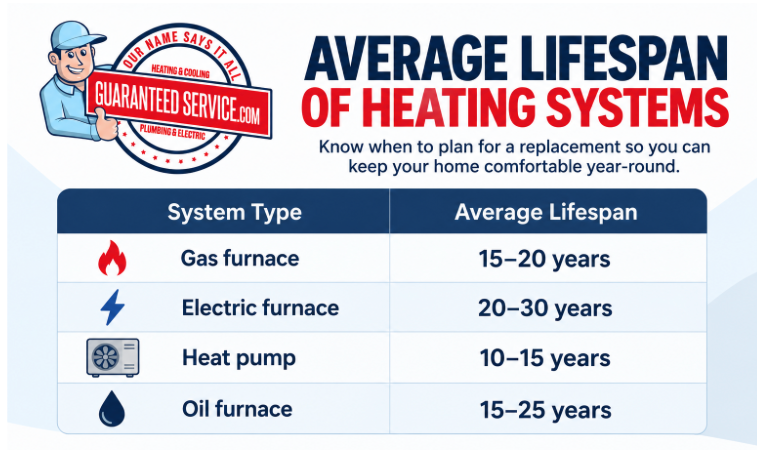
Here is a straightforward reference for the most common residential heating systems:

These ranges assume regular maintenance, so a neglected gas furnace can fall well short of 15 years, while a well-serviced one can push past 20. The gas furnace range is the one most relevant to Manasquan homeowners, since natural gas is the dominant heating fuel in the borough. Oil furnace lifespans are included here as a general reference – Guaranteed Service specializes in gas furnaces and heat pump systems and does not service oil-fired equipment.
High-efficiency gas furnaces, systems rated at 95% AFUE or above, tend to have more sophisticated components, which means they can last longer but also require consistent maintenance to reach that ceiling.
What Shortens a Gas Furnace's Lifespan?
Even a well-made furnace can fail early if any of these factors are working against it.
Neglected air filters. A dirty filter restricts airflow and forces the system to work harder than it should. This is one of the most common causes of premature wear. Filters should be replaced every one to three months depending on your home.
Skipped annual maintenance. A professional tune-up catches developing issues – worn igniter, early corrosion, calibration drift – before they compound into major failures. Furnaces that skip regular service age faster and fail less predictably.
Improper sizing. A furnace that is too large for the home short-cycles – it fires up, quickly overheats the space, shuts off, then repeats. That constant starting and stopping puts more mechanical stress on the system than normal operation and shortens its life significantly.
Low-quality installation. A furnace installed incorrectly – wrong size, poor venting, inadequate gas pressure – will underperform and wear out faster regardless of the brand or efficiency rating.
Ignored warning signs. Strange noises, uneven heating, and small performance changes are often early indicators of component wear. Addressing them early is almost always less expensive than waiting for a full breakdown.
For homeowners near the Jersey Shore, there is one more factor to add to this list.
Why Manasquan Shore Homes Are Harder on Furnaces
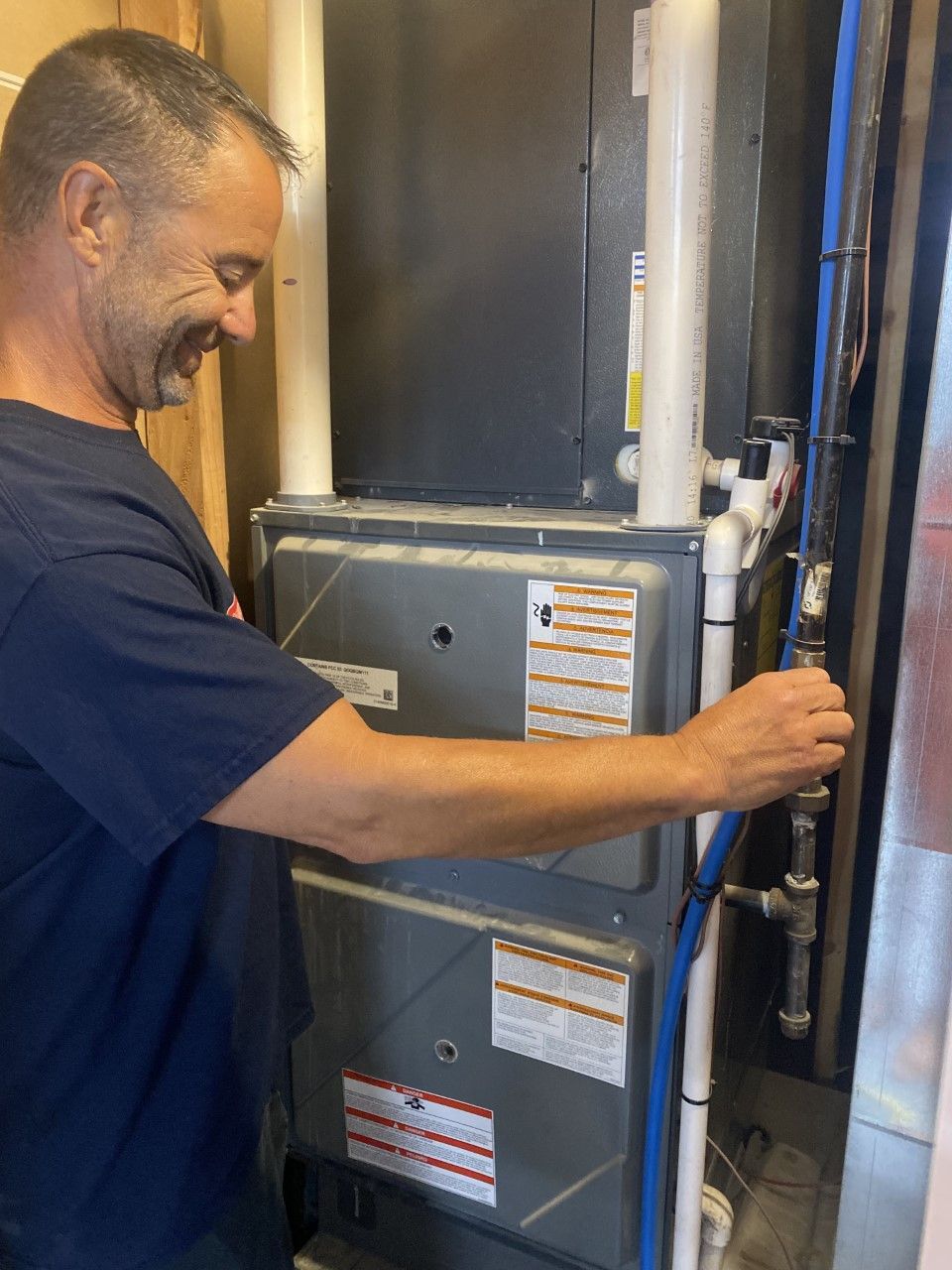
Salt air from the Manasquan Inlet and Atlantic Ocean is not just an outdoor problem. It enters homes through ventilation openings and everyday air movement, then goes to work on furnace components – corroding heat exchangers, burner assemblies, and flue vents at a rate that simply does not happen in an inland NJ home. A gas furnace that might run reliably for 20 years in a well-maintained Princeton home may reach end of life closer to 15 to 17 years in a shore property within a few blocks of the water.
Then there is the housing stock. With a median build year of approximately 1961, a large share of Manasquan homes are running furnaces that are original or on their first replacement, systems already at or past the standard 15 to 20 year benchmark. For a homeowner who bought an older shore cottage and has not thought much about the furnace, this is worth knowing sooner rather than later.
Finally, seasonal vacancy patterns put a specific kind of stress on these systems. Shore homes that sit unoccupied from spring through September accumulate dust and debris inside furnace cabinets over the summer. When the system fires up for the first time in October, those conditions, combined with the thermal shock of going from cold to full demand, accelerate wear on already-aging components.
This does not mean every Manasquan furnace is about to fail. But it does mean annual maintenance matters more here than it does inland, and knowing the signs of a system approaching end of life is especially valuable in this community.
Signs Your Furnace Is Nearing the End of Its Life
If your system is showing any of the following signs, it is worth getting a professional assessment before the heating season.
- The system is 15 years old or older – once a gas furnace crosses this threshold, the calculus on repair vs. replace shifts meaningfully
- Rising energy bills without explanation – a furnace losing efficiency has to run longer to produce the same heat, and that shows up on your gas bill
- Frequent repairs – one repair in a season is normal; repeated repairs signal that multiple components are wearing out together
- Uneven heating – some rooms comfortable while others stay cold, even with vents open and filters clean
- Unusual noises – banging, rattling, or a furnace that cycles on and off without completing a full heating run
- A yellow pilot light instead of blue – a yellow flame can indicate incomplete combustion and a potential carbon monoxide risk; this is an urgent safety concern
- Visible rust or cracks near the heat exchanger – a cracked heat exchanger is the primary source of CO exposure from a gas furnace and is grounds for immediate replacement
- Corrosion around the cabinet or flue venting – for Manasquan homeowners near the beach, salt-air accelerated corrosion on external components is an early warning sign worth taking seriously
Repair vs. Replace: How to Decide
For most Manasquan homeowners, once a gas furnace crosses the 15-year mark in a coastal environment the question is rarely whether to replace, it’s when. Here is the framework we use to help you decide.
Age. If your furnace is under 10 years old and the repair is straightforward, repair makes sense. If it is 15 years or older, replacement deserves serious consideration – not because it is always the answer, but because the math changes significantly at that point. Coastal conditions mean Manasquan systems often start their decline earlier than inland counterparts.
The 50% rule. If the cost of a repair approaches or exceeds 50% of what a new system would cost, replacement is almost always the smarter long-term investment. You are putting significant money into a system that is still aging and the next repair is usually not far behind.
The frequency pattern. One repair in a season is normal. Two in the same season is a signal. If you have been calling for service repeatedly, the system is telling you something. In our experience, aging shore home furnaces that start breaking down tend to accelerate and what starts as one issue in October often becomes two or three by February.
The efficiency gap. A furnace more than 15 years old likely runs at 60 to 80% AFUE. New high-efficiency systems operate at 95%+. That gap adds up over a heating season that runs October through April, and the long-term fuel savings often justify the upfront replacement cost faster than homeowners expect.
If your system is already showing multiple signs from the list above, the more useful next step is getting a furnace replacement estimate so you have real numbers to make the decision with.
How to Extend Your Furnace's Lifespan
If your furnace is in reasonable shape and you want to get the most out of it before a replacement conversation becomes necessary, these steps make a genuine difference.
Schedule an annual furnace tune-up. This is the single most effective step you can take. A professional inspection catches early wear, cleans components that accumulate buildup, and calibrates the system to run efficiently. For shore homes in Manasquan that have sat vacant all summer, a fall tune-up before the first cold snap is especially important. A comprehensive inspection and safety check before winter is the most reliable way to know where your system actually stands.
Replace your air filter every one to three months. A clean filter is the cheapest furnace maintenance you can do yourself – do not skip it.
Keep vents and registers clear. Blocked return air vents force the system to work harder and increase stress on the blower motor over time.
Do not ignore small changes. A new noise, a slight drop in performance, or a marginal increase in your gas bill are worth a call. Small issues repaired early rarely become large ones.
When Is a High-Efficiency Replacement Worth It?
If your furnace is approaching end of life, upgrading to a high-efficiency system is worth serious consideration. Modern gas furnaces operate at 95 to 98% AFUE, meaning 95 to 98 cents of every dollar of gas becomes usable heat. Systems that are 20+ years old often run at 60 to 80% AFUE. That efficiency gap adds up significantly over a Jersey Shore heating season that runs from October through April.
Don't Wait for a January Breakdown
If your furnace is 15 years or older, getting ahead of the decision now is almost always less stressful and less expensive than reacting to a failure mid-winter. Guaranteed Service has been replacing gas heating systems for homeowners across Manasquan and Monmouth County, backed by 4,500+ Google reviews at 4.8 stars. Reach out for a furnace replacement estimate: upfront pricing, no pressure, and a straight answer about what your system actually needs.
Furnace Lifespan FAQs
How long does a gas furnace last on average?
Most gas furnaces last 15 to 20 years with regular maintenance. In coastal environments like Manasquan, that range can run shorter due to salt-air corrosion on internal components.
How do I know if my furnace is too old to repair?
If your system is over 15 years old and a repair would cost more than half the price of a new furnace, replacement is usually the smarter investment. Frequent repairs in the same season are also a clear signal it is time to have a replacement conversation.
Does salt air near the Manasquan Inlet really shorten a furnace's life?
Yes, salt air accelerates corrosion on heat exchangers, burner assemblies, and flue vents, which are the components most likely to cut a furnace's life short. Homes within a few blocks of the water are especially affected.
What is the 50% rule for furnace replacement?
If the cost of a repair approaches or exceeds 50% of the cost of a new system, replacement is generally the more cost-effective decision especially for systems already past the 15-year mark.
How much more efficient are new furnaces compared to older ones?
A gas furnace from 20+ years ago typically runs at 60 to 80% AFUE. Modern high-efficiency systems operate at 95 to 98% AFUE and that gap adds up meaningfully over a full Jersey Shore heating season.
Can I extend my furnace's lifespan if it's getting older?
Annual professional maintenance, regular filter changes, and addressing small issues early are the most effective ways to extend a furnace's service life. For systems already past 15 to 20 years in a coastal home, maintenance buys time, but replacement is likely the more reliable long-term path.
How long does furnace replacement take?
Most furnace replacement jobs are completed in a single day. Homes that need ductwork adjustments or gas line modifications may take longer; we confirm the full timeline during the in-home assessment before anything is scheduled.